
Roofing underlayment is one of the most important components of a roofing system, yet it is rarely visible once installation is complete. Installed directly on top of the roof deck and beneath shingles, tiles, or metal panels, underlayment acts as a secondary barrier against moisture, wind-driven rain, and temperature extremes. While the outer roofing material is designed to shed water, underlayment provides critical protection when that outer layer is compromised.
Understanding roofing underlayment material types is essential for homeowners planning a roof replacement and for contractors aiming to build durable, code-compliant roofing systems. Each material offers different levels of water resistance, durability, breathability, and cost. Choosing the right option can significantly affect roof performance and lifespan, while the wrong choice can lead to leaks, premature deterioration, and costly repairs.
This article explores the most common roofing underlayment material types, how they function, and what factors should guide your selection.
The Purpose and Importance of Roofing Underlayment
Roofing underlayment serves as a protective layer between the roof deck typically plywood or oriented strand board and the finished roofing material. Its primary role is moisture protection. If rain penetrates shingles or panels, underlayment helps prevent water from reaching the roof deck and interior spaces.
Underlayment also protects the roof during construction. Roofing projects often take several days, and underlayment provides temporary weather resistance before the final roofing material is installed. In addition, it creates a smoother surface for shingles or panels, reducing friction and accommodating minor movements caused by thermal expansion.
Asphalt-Saturated Felt Underlayment
Asphalt-saturated felt, often called felt paper or tar paper, is one of the oldest roofing underlayment material types still in use today. It is manufactured from a base mat of cellulose or fiberglass that is saturated with asphalt to provide water resistance.
Felt underlayment is commonly available in two grades: 15-pound and 30-pound. These designations indicate relative thickness and durability rather than actual weight. Fifteen-pound felt is thinner and more economical, while thirty-pound felt offers better tear resistance and performs slightly better in harsh weather.
One advantage of felt underlayment is its low cost and widespread availability. It has been used for decades and remains familiar to many roofing contractors. However, felt has several limitations. It is water-resistant but not waterproof, meaning it can absorb moisture. When wet, it may wrinkle or buckle, which can telegraph through shingles and affect roof appearance.
Felt underlayment is also more vulnerable to UV exposure and can degrade if left uncovered for extended periods. While it is still used under asphalt shingles in some residential applications, it is increasingly being replaced by synthetic alternatives due to performance concerns.
Synthetic Roofing Underlayment
Synthetic roofing underlayment has become one of the most popular roofing underlayment material types in modern construction. It is typically made from woven or spun polymers such as polypropylene or polyethylene and is engineered for strength, durability, and moisture resistance. One of the most significant advantages of synthetic underlayment is its tear resistance. It is much stronger than traditional felt and can withstand high winds and foot traffic during installation. This makes it safer for installers and more reliable on steep-slope or complex roofs.
Synthetic underlayment does not absorb water, so it remains flat and stable even when exposed to rain. Many products are designed to be UV-resistant, allowing them to remain exposed for weeks or even months without degrading. This flexibility is valuable for projects with extended timelines.
Another benefit is lightweight construction. Synthetic rolls are easier to handle and install, often covering more area per roll than felt. Many products also include printed alignment guides that improve installation accuracy and efficiency. Although synthetic underlayment costs more than felt, its performance, longevity, and reduced risk of installation issues often make it a cost-effective choice in the long term.
Rubberized Asphalt (Self-Adhering) Underlayment
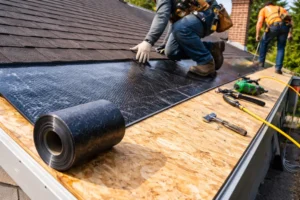
Rubberized asphalt underlayment, often referred to as self-adhering underlayment or ice and water shield, offers the highest level of moisture protection among roofing underlayment material types. It is made from asphalt modified with rubber polymers and features a peel-and-stick adhesive backing.
This type of underlayment bonds directly to the roof deck, forming a watertight seal. It also seals around nails and fasteners, preventing water intrusion even if shingles are damaged or blown off. Because of this, rubberized asphalt underlayment is especially effective in areas prone to ice dams, heavy snow, and wind-driven rain.
Self-adhering underlayment is commonly installed along roof eaves, valleys, around chimneys, skylights, and other vulnerable areas. In many cold-weather regions, building codes require its use in these locations. The primary disadvantages are cost and breathability. Rubberized asphalt underlayment is more expensive than felt or synthetic options and does not allow moisture vapor to escape easily. Proper attic ventilation is essential to prevent trapped moisture within the roof assembly.
Peel-and-Stick Synthetic Underlayment
Peel-and-stick synthetic underlayment is a newer innovation that combines features of synthetic materials with self-adhesive technology. Unlike traditional rubberized asphalt, these products are typically lighter, thinner, and more breathable.
This type of underlayment adheres directly to the roof deck, eliminating the need for mechanical fasteners. By reducing the number of nail penetrations, peel-and-stick synthetic underlayment lowers the risk of leaks and improves overall water resistance.
It is commonly used in high-performance roofing systems and is particularly popular under metal roofing, where expansion and contraction can stress mechanically fastened underlayments. Some products are designed for full-roof coverage, offering consistent protection across the entire surface. The main drawback is higher material cost, which can limit its use to premium residential or commercial projects.
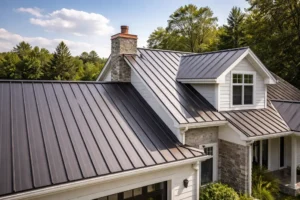
Underlayment for Metal Roofing Systems
Metal roofing systems place unique demands on underlayment. Metal panels expand and contract significantly with temperature changes, and condensation can form on their underside if moisture is present.
Synthetic underlayment is generally considered the best option for metal roofs due to its durability, moisture resistance, and ability to handle high temperatures. Many synthetic products are specifically rated for use under metal roofing and maintain their integrity in extreme heat. Traditional felt underlayment is usually not recommended for metal roofs, as it can degrade under high temperatures and does not manage condensation effectively.
Breathable Versus Non-Breathable Underlayment
An important distinction among roofing underlayment material types is breathability. Breathable underlayments allow moisture vapor to pass through while still blocking liquid water. This helps regulate moisture within the roof system and reduces the risk of mold, mildew, and wood rot.
Most modern synthetic underlayments are engineered to be breathable, making them well-suited for energy-efficient homes with tight building envelopes. Non-breathable options, such as rubberized asphalt, provide superior waterproofing but require careful coordination with ventilation systems. In many roofing systems, a combination approach is used. Self-adhering underlayment is installed in high-risk areas, while breathable synthetic underlayment covers the remaining roof surface.
Climate and Building Code Considerations
Climate is a major factor when selecting roofing underlayment material types. Cold climates often require ice and water protection along eaves and valleys, while hot climates demand underlayments that can withstand prolonged heat exposure.
Wind-prone regions benefit from tear-resistant synthetic underlayment that remains intact even if roofing materials are damaged. Areas with frequent rainfall may require enhanced water resistance or extended coverage of self-adhering products. Local building codes frequently specify minimum underlayment requirements based on roof slope, climate zone, and roofing material. Always verify local regulations and manufacturer recommendations before choosing an underlayment.
Cost Differences and Long-Term Value
Cost varies significantly among roofing underlayment material types. Asphalt felt is the least expensive option but offers the lowest performance. Synthetic underlayment costs more upfront but provides better durability, safety, and moisture resistance.
Rubberized asphalt and peel-and-stick synthetic underlayments are the most expensive but offer superior protection in critical areas. When used strategically, these materials can prevent water damage and reduce long-term maintenance costs. Evaluating underlayment cost should include not only material price but also installation efficiency, durability, and potential savings from reduced repairs.
Choosing the Right Roofing Underlayment
Selecting the right roofing underlayment requires balancing performance, climate suitability, roofing material compatibility, and budget. For many projects, combining different underlayment types delivers the best results.
Homeowners should work closely with experienced roofing contractors to ensure the chosen underlayment meets code requirements and complements the overall roofing system. While underlayment may never be seen, its role in protecting the structure is critical.
Final Thoughts
Roofing underlayment material types have evolved significantly, offering a wide range of solutions for different climates, roofing materials, and performance needs. From traditional asphalt felt to advanced synthetic and self-adhering products, each option plays a role in modern roofing systems.
A roof’s strength is not determined solely by what is visible on the surface. The layers beneath, especially the underlayment, are what truly protect a home from moisture, weather extremes, and long-term damage. Making an informed underlayment choice is a key step toward a durable, reliable roof.
FAQs
Roofing underlayment adds a protective layer that helps prevent moisture from reaching the roof deck if water gets past the shingles or panels.
The most common types are asphalt-saturated felt, synthetic underlayment, rubberized asphalt (self-adhering), and peel-and-stick synthetic underlayment.
In most cases, yes. Synthetic underlayment is stronger, more water-resistant, and more durable than traditional felt.
Ice and water shield is a self-adhering underlayment used in vulnerable areas like eaves and valleys to prevent leaks from ice dams and wind-driven rain.
Some synthetic underlayments can remain exposed for weeks or months, but felt and self-adhering products should be covered sooner.
Yes, most building codes require roofing underlayment, with specific types mandated in certain climates or roof designs.
High-temperature-rated synthetic or peel-and-stick underlayment is typically recommended for metal roofing systems.
Yes, using the right underlayment can significantly extend roof life by reducing moisture damage and deck deterioration.
Breathable underlayment helps moisture vapor escape, reducing the risk of mold and rot in the roof structure.
Yes, many roofs use self-adhering underlayment in critical areas and synthetic underlayment across the rest of the roof.