
Replacing a roof is one of the most significant maintenance projects a homeowner can undertake. It is also one of the most regulated construction activities in residential building. Across the United States, roof replacement projects are commonly subject to permitting requirements because roofing systems directly affect structural integrity, weather resistance, fire safety, and long-term durability. While the rules vary by location, permits are a critical part of ensuring a roof replacement is completed safely and legally.
This article explains how roof replacement permits work, when they are required, why they matter, and what homeowners and contractors should expect during the process.
What a roof replacement permit actually regulates
A roof replacement permit is formal approval issued by a local building department allowing roofing work to proceed under the jurisdiction’s adopted building codes. Most U.S. jurisdictions base their requirements on versions of the International Residential Code or International Building Code, which establish minimum standards for construction safety.
According to Wikipedia’s overview of building codes , building codes are designed to protect public health and safety by regulating structural strength, fire resistance, sanitation, and weather protection. Roofing falls squarely under these objectives because it serves as the primary barrier between a structure and the elements. A roof permit typically ensures compliance with requirements related to fastening methods, underlayment installation, flashing details, ventilation, fire ratings, and wind resistance.
Why roof replacement permits are important
Permits are not just administrative formalities. They serve as a safeguard to confirm that roofing work meets minimum safety standards. Poorly installed roofs can lead to leaks, structural decay, mold growth, fire hazards, or even roof failure under extreme weather.
From a legal and financial perspective, permits protect homeowners. Insurance companies may deny or reduce claims if roof work was completed without required permits. During property sales, unpermitted roof replacements can delay closings, reduce appraised value, or require retroactive permitting and inspections. Permits also provide an official record that the work was reviewed by a qualified inspector, which can be valuable years later.
When a roof replacement permit is usually required
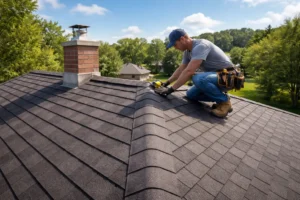
Most jurisdictions require a permit when roofing work involves more than minor repairs. Full roof replacements, large-area re-roofs, and tear-offs down to the roof deck almost always require permits.
Permits are also commonly required when changing roofing materials, such as replacing asphalt shingles with metal or tile, because different materials place different loads on the structure. Decking replacement, ventilation modifications, skylight installations, and structural repairs also typically trigger permitting requirements. Local governments enforce these rules under their authority to regulate residential construction. The U.S. Department of Housing and Urban Development explains that building codes and permit systems are essential tools used by local governments to ensure housing safety and durability.
Understanding repair versus replacement
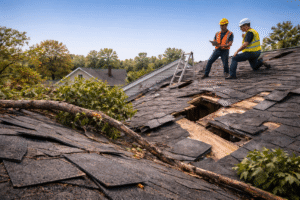
Homeowners often assume that if work is labeled a “repair,” no permit is needed. However, the distinction between repair and replacement is defined locally. Replacing a few damaged shingles may qualify as a repair, but replacing a large percentage of the roof surface usually qualifies as a replacement. Once the roof deck is exposed, multiple layers are involved, or structural components are altered, permitting requirements almost always apply.
Who is responsible for pulling the permit
Responsibility for obtaining a permit depends on local regulations and contract terms. In many cases, licensed roofing contractors handle permits as part of their service. Some jurisdictions allow homeowners to pull permits for work on their primary residence, while others require licensed contractors. Even when a contractor pulls the permit, homeowners should verify that the permit has been issued and posted. Ultimately, the property owner is responsible for unpermitted work.
What information is required for a roof permit
Most permit applications require basic project details, including the property address, scope of work, roofing material type, roof area, and contractor licensing information. Some jurisdictions also require ventilation details or simple roof diagrams. Permit fees vary widely but are generally modest compared to the total cost of roof replacement.
Inspections during a permitted roof replacement
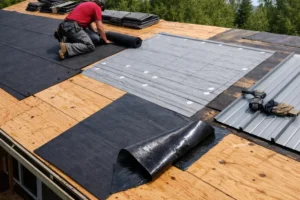
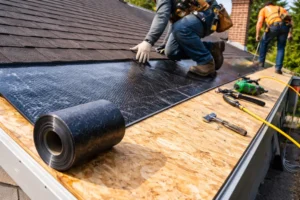
Permitted roofing projects usually involve at least one inspection. Inspectors may review the roof deck, underlayment, flashing, and fastening methods before final materials are installed. A final inspection confirms that the completed roof meets local code requirements. Common inspection issues include missing drip edges, improper flashing, insufficient ventilation, and incorrect fastening patterns.
Special zoning and environmental considerations
Homes located in hurricane-prone, wildfire-prone, or coastal regions may face additional requirements. High-wind zones often require enhanced fastening schedules and wind-rated materials. Wildfire zones may mandate fire-resistant roofing assemblies. These additional requirements are typically enforced through the permitting process and should be considered when planning the project budget and timeline.
Consequences of skipping required permits
Replacing a roof without a required permit can result in stop-work orders, fines, reinspection fees, and requirements to expose completed work for inspection. In some cases, homeowners must apply for retroactive permits, which can be more expensive and time-consuming. Unpermitted work can also surface later during insurance claims or property sales, creating delays and unexpected costs.
Conclusion
Roof replacement permit requirements exist to protect homeowners, occupants, and communities. While rules vary by location, permits are commonly required for full replacements, material changes, and structural modifications. Verifying local requirements, obtaining permits before work begins, and keeping proper documentation are essential steps in any successful roofing project. A properly permitted roof replacement is not just a legal requirement it is an investment in safety, durability, and long-term property value.
FAQs
In most cities, a permit is required for a full roof replacement, especially if tear-off or material changes are involved.
Often no, because replacing shingles over a large area is usually classified as a replacement, not a repair.
Typically the roofing contractor, but homeowners should always confirm the permit is issued.
Yes, and these often require additional review due to added weight and structural considerations.
Permit fees vary by location but are generally small compared to the total roof replacement cost.
You may face fines, stop-work orders, or be required to obtain a retroactive permit.
Yes, replacing or repairing roof decking almost always requires a permit and inspection.
Yes, insurance claims do not eliminate local permit requirements.
Most permitted roof replacements require at least one inspection, often a final inspection.
No, HOA approval does not replace local building permit requirements.