
Residential roofing warranty coverage is one of the most misunderstood aspects of homeownership. Many homeowners assume that once a new roof is installed, they are fully protected for decades. In reality, roofing warranties are layered, conditional, and highly dependent on how the roof is installed, maintained, and repaired over time.
Understanding how residential roofing warranties work helps homeowners make better decisions before a roof replacement and avoid costly surprises years later. It also clarifies what protections actually exist if shingles fail early, leaks develop, or workmanship issues appear. A clear grasp of warranty coverage is just as important as choosing the right roofing materials. This article breaks down the types of residential roofing warranties, what they typically cover, what they exclude, and how homeowners can protect their coverage throughout the life of their roof.
The Two Main Types of Residential Roofing Warranties
Most residential roofing systems are protected by two separate warranties: a manufacturer’s warranty and a workmanship warranty. These warranties serve different purposes and are issued by different parties.
Manufacturer’s Material Warranty
A manufacturer’s warranty covers defects in the roofing materials themselves. This typically includes shingles, underlayment, and certain accessory components. If the materials fail prematurely due to a manufacturing defect, the manufacturer may cover replacement materials and, in some cases, limited labor costs.
Material warranties often last anywhere from 20 years to a lifetime, depending on the product and manufacturer. However, the length of coverage does not mean the warranty is comprehensive for the entire duration.
Most manufacturer warranties are prorated after an initial non-prorated period. This means coverage value decreases over time, sometimes significantly. Homeowners can learn more about how roofing materials are manufactured and classified by reviewing the overview of roofing systems on Wikipedia.
Workmanship Warranty
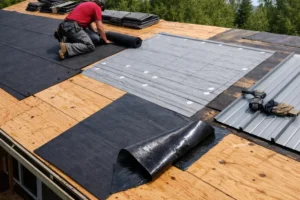
A workmanship warranty covers errors related to installation. This warranty is provided by the roofing contractor, not the manufacturer. If leaks or failures occur because the roof was installed incorrectly, the workmanship warranty is what applies.
Workmanship warranties vary widely. Some contractors offer coverage for one year, while others provide extended workmanship warranties lasting five, ten, or even twenty years. It is important to understand that no manufacturer warranty will cover poor installation. Even the highest-grade shingles can fail if installed improperly, making workmanship coverage critical.
What Residential Roofing Warranties Typically Cover
Roofing warranties are not all-inclusive guarantees. They are limited agreements with specific terms and conditions. Understanding what is commonly covered helps set realistic expectations.
Manufacturing Defects
Material warranties generally cover defects such as:
- Shingles cracking, blistering, or splitting due to production flaws
- Granule adhesion issues unrelated to normal wear
- Premature deterioration caused by faulty materials
These issues must be proven to result from manufacturing defects, not weather exposure, improper installation, or lack of maintenance.
Installation-Related Leaks (Workmanship)
Workmanship warranties typically cover:
- Improper shingle placement
- Incorrect flashing installation
- Poor ventilation installation leading to moisture issues
- Fastening errors that cause wind uplift or leaks
Coverage usually applies only if the problem results directly from the contractor’s work, not external factors.
Limited Labor Coverage (Certain Manufacturer Warranties)
Some enhanced manufacturer warranties include partial labor coverage during the early years of the roof’s life. These are often available only when the roof is installed by a certified contractor and all system components are used.
Common Exclusions in Residential Roofing Warranties
Many homeowners discover warranty limitations only after a claim is denied. Knowing the most common exclusions helps prevent misunderstandings.
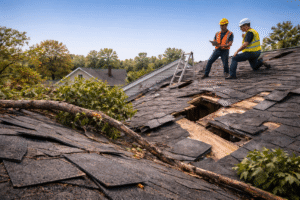
Storm and Weather Damage
Most roofing warranties do not cover damage caused by:
- Hail
- Hurricanes or tornadoes
- Extreme wind events
- Fallen trees or debris
Weather-related damage is typically handled through homeowners insurance, not roofing warranties.
Improper Ventilation
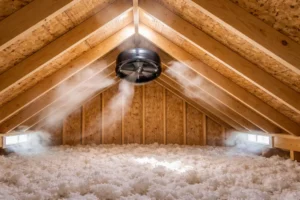
Improper attic ventilation is one of the most common reasons warranties are voided. Excess heat and moisture can cause shingles to age prematurely.
If ventilation does not meet manufacturer requirements, material warranties may be reduced or invalidated entirely.
Unauthorized Repairs or Modifications
Any repairs or alterations performed by someone other than a qualified roofing professional may void portions of the warranty. This includes:
- DIY repairs
- Satellite dish installations
- Solar panel attachments
- Unapproved roof penetrations
Normal Wear and Tear
Roofing materials naturally degrade over time. Warranties do not cover:
- Fading or discoloration
- Granule loss from aging
- Minor cosmetic changes
These conditions are considered part of normal roof aging.
Prorated vs Non-Prorated Warranty Coverage
Warranty value changes over time, and understanding prorated coverage is essential.
Non-Prorated Coverage
During the non-prorated period, the manufacturer typically covers replacement materials at full value. This period often lasts between 5 and 10 years, depending on the product.
Prorated Coverage
After the non-prorated period ends, coverage value decreases annually. For example, a shingle may retain only 30–40% of its original value after 20 years.
Labor costs are often excluded entirely during the prorated phase.
Extended and System Warranties
Some manufacturers offer enhanced warranties that go beyond standard material coverage. These warranties often require specific installation conditions.
Requirements for Enhanced Warranties
Extended warranties typically require:
- Certified contractor installation
- Complete roofing systems using approved components
- Registered warranty documentation within a specific timeframe
What Extended Warranties May Include
Enhanced warranties may offer:
- Longer non-prorated periods
- Limited or full labor coverage
- Transferable coverage for future homeowners
These warranties can add value but are only effective if all conditions are met precisely.
Warranty Transferability When Selling a Home
Many residential roofing warranties are transferable, but transfer rules vary.
Some warranties allow one transfer within a specific time period after installation. Others require transfer paperwork and fees. Failure to transfer properly may void coverage for the new homeowner.
Transferable warranties can be a strong selling point, but only if documentation is complete and accurate.
How Maintenance Affects Roofing Warranty Coverage
Roof warranties often include maintenance requirements. Neglecting basic upkeep can result in denied claims.
Typical Maintenance Expectations
Manufacturers and contractors may require homeowners to:
- Keep gutters clean
- Remove debris from the roof
- Address minor issues promptly
- Maintain proper attic ventilation
Documenting maintenance activities can help support future warranty claims.
Filing a Residential Roofing Warranty Claim
The claims process can be time-consuming and documentation-heavy.
Steps Often Required
- Provide proof of purchase and installation
- Submit photos and inspection reports
- Allow manufacturer or contractor inspections
- Wait for claim evaluation and determination
Claims are not guaranteed approval, even if a defect appears obvious.
Why Professional Installation Is Critical to Warranty Protection
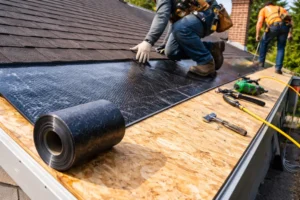
Even the best roofing materials cannot perform as intended without proper installation. Incorrect nailing patterns, poor flashing details, or improper ventilation can shorten roof lifespan and void warranties.
Professional installation ensures compliance with manufacturer specifications and local building codes, both of which are essential for maintaining warranty validity.
Choosing Roofing Materials with Warranty Coverage in Mind
Warranty terms vary widely between products. When selecting roofing materials, homeowners should consider:
- Length of non-prorated coverage
- Labor coverage availability
- Transferability options
- Ventilation requirements
- Contractor certification requirements
The “longest” warranty is not always the best warranty if coverage is heavily prorated or restrictive.
Long-Term Value of Understanding Residential Roofing Warranties
Residential roofing warranty coverage is not just paperwork it directly affects long-term ownership costs and peace of mind. Homeowners who understand their coverage can make informed decisions, maintain compliance, and avoid costly disputes.
A well-installed roof paired with clear warranty documentation offers protection not only against defects, but against uncertainty. Knowing what is covered, what is excluded, and how to preserve coverage ensures the roof performs as expected for decades to come.
FAQs
It typically covers manufacturing defects in roofing materials and, separately, installation errors through a workmanship warranty.
No. Roofing warranties cover defects or installation issues, while insurance covers storm damage, accidents, and sudden losses.
Material warranties often last 20 years to a lifetime, while workmanship warranties usually range from 1 to 10 years.
Most material warranties become prorated over time, meaning coverage value decreases as the roof ages.
Improper ventilation, unapproved repairs, poor maintenance, or modifications like satellite or solar installations can void coverage.
Leaks caused by installation errors may be covered under a workmanship warranty, but leaks from storms or aging usually are not.
Many warranties are transferable, but they often require paperwork, fees, and transfer within a specific time window.
Labor is usually excluded from standard material warranties but may be included in enhanced or extended warranty programs.
Yes. Most manufacturer warranties require registration shortly after installation to be valid.
By using certified installers, maintaining proper ventilation, keeping records, and performing routine roof maintenance.