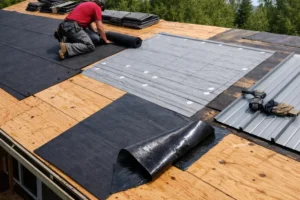

Ice and water shield (also called an ice barrier membrane) is one of those roof upgrades that feels “optional” until the day it saves your drywall, insulation, and ceilings. It’s a self-adhering waterproof membrane designed to seal around nails and resist water that backs up under shingles most commonly from ice dams, wind-driven rain, and vulnerable transition areas like valleys and penetrations.
So what does it cost to install ice and water shield? The honest answer: it depends on how much of the roof needs coverage and how complicated the roof geometry is. The helpful answer: you can still estimate your budget with surprising accuracy once you understand the pricing drivers.
Below is a practical, real-world cost guide material, labor, and the common factors that make quotes vary.
Typical ice and water shield installation cost ranges
Most homeowners see pricing fall into two buckets:
Targeted installation (most common)
This approach installs ice and water shield along roof edges, valleys, and other high-risk areas. It’s commonly required by building codes in colder regions and provides protection where leaks are most likely to occur.
Full-deck coverage (less common, higher cost)
The membrane is installed across the entire roof deck. This option provides maximum protection but comes at a significantly higher price.
Installed costs typically range from $7 to $9 per square foot, depending on labor rates, roof complexity, and product type. This pricing is most common when ice and water shield is treated as a standalone scope of work or when labor and detailing are priced separately.
When installed as part of a full roof replacement, contractors often price ice and water shield as an add-on per “square” (100 square feet) because setup and teardown are already included in the roofing job.
Material cost: what the membrane itself costs
Material pricing depends heavily on the type of ice and water shield used.
Standard smooth membrane
This is the most common option for asphalt shingle roofs. Material costs typically start around $100 per square.
Granular or sanded membrane
Often used where the membrane may be temporarily exposed or where added slip resistance is needed. This option is usually slightly more expensive.
High-heat ice and water shield
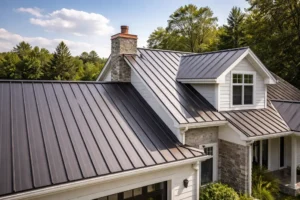
Designed for metal roofs or hot climates where standard membranes may soften or degrade. These products often start around $125 per square or more.
Material prices fluctuate by brand, region, and supply availability, but these ranges provide a solid baseline for budgeting.
Labor cost: why installation prices vary so much
Labor is the biggest variable in ice and water shield installation cost. Even with identical materials, two roofs can cost very different amounts due to installation conditions.
Labor costs increase when:
- Roof pitch is steep or difficult to access
- The roof has multiple valleys, dormers, or cutups
- There are numerous penetrations such as vents or skylights
- The roof deck is damaged or uneven
- The installation is a retrofit rather than part of a full tear-off
Proper installation requires careful alignment, correct overlaps, and clean adhesion. Poor installation can trap water or create weak seams, defeating the purpose of the membrane entirely.
Targeted installation vs full coverage
Targeted installation
Targeted installation focuses on areas most vulnerable to water intrusion, including:
- Eaves and roof edges
- Valleys
- Chimneys and skylights
- Roof-to-wall transitions
This method offers excellent protection at a lower cost because fewer square feet of material are required.
Full-deck installation
Full coverage installs the membrane across the entire roof deck before underlayment and shingles.
This approach is typically reserved for:
- Homes in extreme snow or ice regions
- Roofs with complex geometry and high leak risk
- Buildings with a history of wind-driven rain intrusion
- Certain specialty roofing systems
How roof size affects installation cost
Roof size impacts cost based on how much membrane is actually installed, not the size of the house itself.
Example scenario
A home with a 2,400-square-foot roof:
Targeted installation
- Eaves coverage: 3 feet up the roof along 180 linear feet = 540 square feet
- Valleys and penetrations: approximately 160 square feet
- Total membrane area: about 700 square feet
At typical installed pricing, this could result in a total cost between $4,800 and $6,100, depending on labor rates and detailing.
Full-deck installation
- 2,400 square feet of coverage at $7–$9 per square foot
- Estimated total: $16,800 to $21,600
Additional factors that increase cost
Tear-off vs retrofit installation
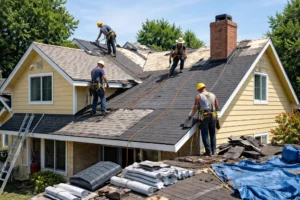
Ice and water shield is best installed on a clean roof deck. Adding it during a roof replacement is usually more cost-effective than attempting to install it over existing shingles.
Retrofit installations are labor-intensive and may not fully address underlying issues.
Roof deck repairs
Rotten or damaged decking especially near roof edges can add unexpected labor and material costs. Many contractors include a deck repair allowance in their estimates.
Drip edge and flashing upgrades
Ice and water shield works best when paired with new drip edge, valley flashing, and chimney flashing. These upgrades improve performance but may add to the total cost.
What to look for in a contractor estimate
A quality estimate should clearly state:
- Where ice and water shield will be installed
- How far up the roof the membrane extends
- Whether valleys and penetrations are included
- The type of membrane being used
- Whether new drip edge or flashing is included
- Any allowances for deck repairs
Is ice and water shield worth the cost?
For homes in cold or mixed climates, ice and water shield often pays for itself by preventing leaks that lead to ceiling damage, insulation saturation, and mold growth.
Even in warmer regions, it adds valuable protection against wind-driven rain, roof penetrations, and sudden weather events. Because it protects areas most likely to fail first, it offers one of the highest returns on investment among roofing upgrades.
Final takeaway
Ice and water shield installation cost depends less on your home size and more on how much membrane is installed, how complex the roof is, and when the work is done.
For most homeowners, targeted installation during a roof replacement provides strong protection at a reasonable cost. Full-deck coverage offers maximum defense but should be reserved for situations where climate, roof design, or past performance truly demand it.
FAQs
Ice and water shield prevents water from backing up under shingles due to ice dams, wind-driven rain, or roof penetrations.
Installation usually costs between $7 and $9 per square foot, depending on roof complexity and labor rates.
In many cold-climate regions, building codes require it along roof eaves and other vulnerable areas.
It can be installed as a retrofit, but costs are higher and effectiveness may be limited compared to installation during reroofing.
No, most homes only need targeted coverage at eaves, valleys, and penetrations.
It doesn’t extend shingle life directly, but it significantly reduces the risk of leaks and deck damage.
It’s less critical but still useful in areas with heavy rain, wind-driven storms, or roof penetrations.
High-heat membranes are designed for metal roofs or hot conditions where standard products may fail.
Typically 24 to 36 inches past the interior wall line, depending on local code and climate.
No, it supplements underlayment and is installed only in high-risk areas or across the full deck if specified.